
Protecting Your Skin in the Winter
February 2026
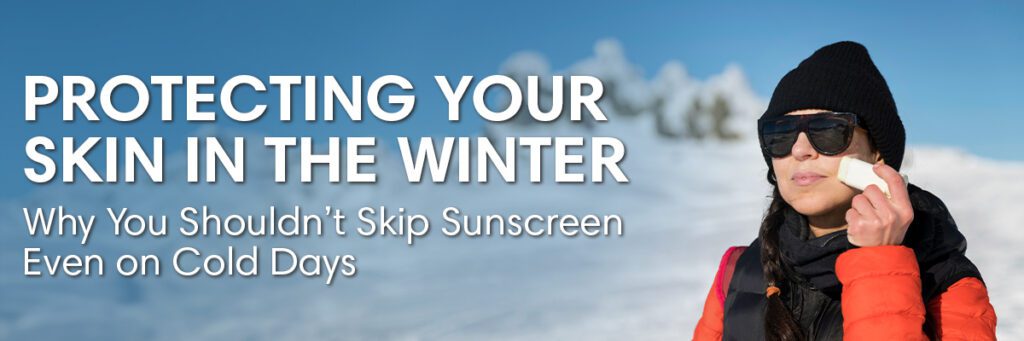
Why You Shouldn’t Skip Sunscreen — Even on Cold Days.
As soon as winter rolls around, many people happily put away the sunscreen for the season. It’s true that by trading in t-shirts and shorts for snowsuits, scarves, and hats, your skin is far less exposed to UV rays than in the summer months.
However, if you’re among those who don’t see a compelling reason to use SPF in the winter, this article is for you! Your skin does still need protection during the winter months – in fact, UV rays can be just as harmful – if not more so – than in summer.
UV Radiation Doesn’t Break for the Season
Have you ever been told that it’s important to apply sunscreen even on cloudy days? The same principle is at play during the winter.
Even chilly, overcast days allow UV rays to reach your skin. These include UVA rays, which penetrate the skin more deeply and are linked to premature aging and more serious cell damage.
According to the Skin Cancer Foundation, UV rays pass through clouds 80% of the time, making sunscreen just as important on a grey day as it is on sunny ones.
The “Sneakier” Ways UV Rays Reach Your Skin in Winter
In winter, the sun can be sneaky. There are a few ways UV rays can reach your skin that you may not even realize.
- Snow and ice are reflective. There’s a reason you have to squint on a sunny day when taking in a landscape covered in fresh snow. Snow and ice are highly reflective – according to the American Academy of Dermatology, up to 80% of the sun’s UV rays are reflected by snow and ice. You’ve likely experienced the effects of the sun reflecting off the snow if you’ve spent a day skiing or sledding and wound up with a sunburn on your face.
- The sun is stronger at higher altitudes. The closer you are to the sun, the more intense the UV exposure. If you’re spending the day on a mountain or visiting a location that sits at a higher altitude, layer on the sunscreen!
- Heat and dry air strip the skin of protection. In winter, our skin is more exposed to the dry outdoor air, heated indoor air, and cold winds. These factors strip moisture from the skin, weakening its natural protective barrier. Compromising the skin’s natural barrier can make it more susceptible to irritation, inflammation, and UV damage. We recommend using a daily hydrating sunscreen to deliver moisture while protecting your skin. CeraVe’s Hydrating Mineral Sunscreen and La Roche Posay’s Anthelios 50 UV Hydra Sunscreen are two great options.
Preventing Long-Term Damage — Aging & Cancer Risk
Preventing UV exposure isn’t just about avoiding sunburns. Prolonged UV exposure can accelerate premature aging, causing fine lines, wrinkles, age spots, or uneven pigmentation.
Importantly, unprotected sun exposure is a significant risk factor for skin cancer. Skipping sunscreen in the winter contributes to your lifetime total exposure and will increase the associated risks just as much as exposure during the summer.
Best Practices for the Best Protection All Winter Long
Optima’s board-certified dermatologists recommend these SPF products to protect your skin in the winter:
- Apply a broad-spectrum daily sunscreen with an SPF of 30 or higher, which will protect you against UVA and UVB rays, two types that cause lasting damage to the skin.
- Making sunscreen part of your daily skincare routine. Even if you’re mostly indoors – or driving a lot – during the winter, UVA rays can penetrate glass, so keep your skin protected!
- Reapply your sunscreen when needed. Reach for the bottle anytime you’re heading outside, especially for an extended period.
- Consider a dual sunscreen and moisturizer to combat the combined effects of dry, damaged skin and sun exposure.
Don’t let colder temperatures and cloudy days fool you – your skin still sees the sun. Make the most of winter by giving your skin a valuable gift – protection from the sun. Adding consistent sunscreen use to your daily skincare routine will ensure your skin stays healthy all year long – and into the future.
Optima Dermatology’s board-certified dermatologists are here to evaluate your skin and make the best daily sunscreen recommendations for your skin type. Request an appointment to speak with one of our expert providers about enhancing your sun protection this winter!