
Skin Cancer Symptoms & Treatment
What Is Skin Cancer?
Skin cancer occurs when skin cells grow abnormally, most often as a result of damage from ultraviolet (UV) radiation. That damage can come from the sun, tanning beds, or sunlamps, and it builds up over time, which is why skin cancer risk increases with age and cumulative sun exposure.
Skin cancer is the most common cancer in the United States — more common than all other cancers combined. The good news is that most skin cancers are highly treatable when caught early, which is why understanding the warning signs and getting regular skin checks matters so much.
Types of Skin Cancer
Skin cancer isn’t a single disease — it’s a group of related conditions that develop in different layers or cell types of the skin. Each type looks different, behaves differently, and is treated differently, so an accurate diagnosis from a dermatologist is the essential first step. The main types include:
Basal Cell Carcinoma (BCC)
The most common type of skin cancer, with an estimated 3.6 million cases diagnosed in the U.S. each year. Basal Cell Carcinoma develops in the basal layer, the deepest layer of the epidermis, and typically grows slowly in sun-exposed areas like the face, neck, and arms. It often looks like a pearly bump or a sore that doesn't heal.
Squamous Cell Carcinoma (SCC)
The second most common type of skin cancer, affecting approximately 1.8 million Americans annually. Squamous Cell Carcinoma develops in the squamous layer, the upper layer of the skin, and often appears as a red, scaly, or crusted bump that may bleed easily. Left untreated, it can grow deeper into surrounding tissue.
Melanoma
The least common but most serious form of skin cancer, melanoma develops in melanocytes, the cells that produce pigment in the skin. An estimated 234,680 new cases are expected to be diagnosed in the U.S. in 2026. When caught in its earliest stages, melanoma is highly treatable, which makes recognizing changes in moles or new spots especially important.
Actinic Keratosis (Precancer)
Actinic keratosis isn't skin cancer yet, but it's a precancerous growth caused by long-term UV damage, and it's the most common precancerous skin condition, affecting more than 58 million Americans each year. If left untreated, it can develop into squamous cell carcinoma, which is why early treatment matters.
Skin Cancer Symptoms and Warning Signs
Skin cancer can look different depending on the type, but paying attention to new, changing, or unusual spots on your skin is the best way to catch it early. General warning signs include:
- A new growth, bump, or sore that doesn’t heal within a few weeks
- A spot that’s scaly, crusted, red, or bleeds easily
- A mole or spot that changes in size, shape, or color
- A sore that heals and then reopens
- Any area of skin that itches, hurts, or feels tender without explanation
For melanoma specifically, dermatologists recommend the ABCDE rule to evaluate moles:
- Asymmetry: One half of the mole looks different from the other half
- Border: The edges are blurry, jagged, or irregular
- Color: The mole has uneven color or multiple shades
- Diameter: The mole is larger than 6mm (about the size of a pencil eraser)
- Evolving: The mole is changing in size, shape, color, or texture over time
Not all melanomas fit this pattern, and not all form in existing moles — many develop on skin that previously looked normal. If you notice any of these changes, or anything on your skin that concerns you, it’s worth having a dermatologist take a look.
Skin Cancer Risk Factors
Anyone can develop skin cancer, but certain factors increase your risk, including:
- Cumulative or intense UV exposure from the sun, tanning beds, or sunlamps
- A history of sunburns, especially blistering sunburns in childhood
- Fair skin, light-colored eyes, or hair that burns easily
- A personal or family history of skin cancer
- Numerous moles or atypical (unusual-looking) moles
- A weakened immune system, such as from an organ transplant or certain medical conditions
- Increasing age, since UV damage builds up over a lifetime
How Is Skin Cancer Diagnosed?
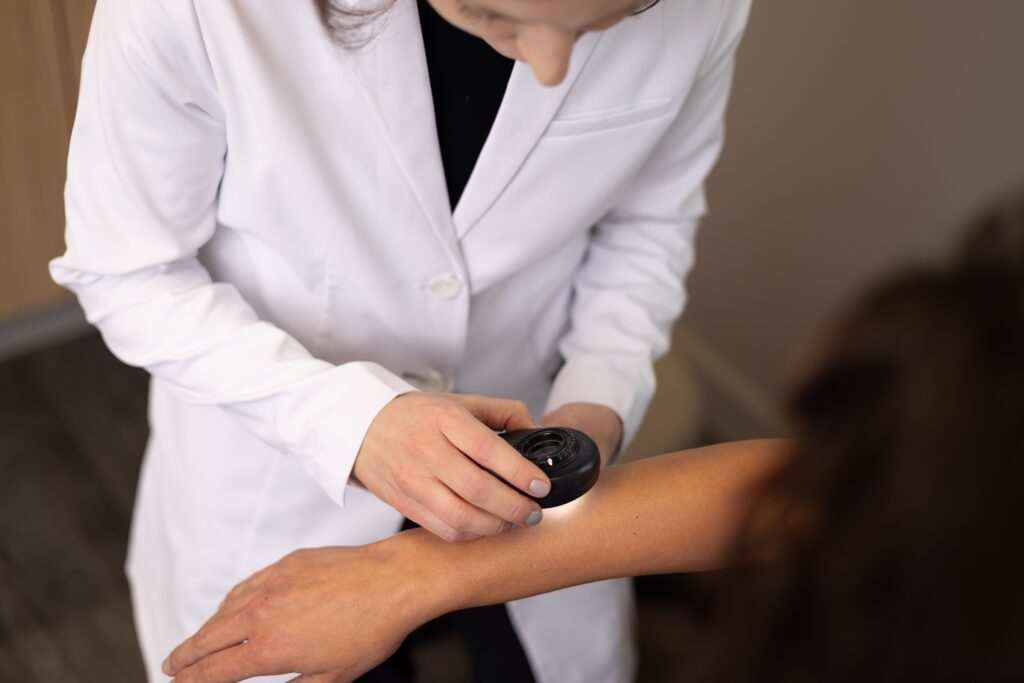
Diagnosis typically starts with a visual skin exam by a board-certified dermatologist. If a spot looks suspicious, your dermatologist will perform a biopsy — removing a small sample of tissue to be examined under a microscope — to confirm whether it’s cancerous and identify the specific type. This diagnosis guides which treatment approach makes the most sense for your situation.
Skin Cancer Treatment
Treatment depends on the type, size, and location of the skin cancer, as well as your personal health history. Options range from topical treatments and light-based therapies to surgical procedures such as excision or Mohs micrographic surgery, which has a cure rate of up to 99% for certain skin cancers. For melanoma that has spread beyond the skin, treatment may also include immunotherapy, targeted therapy, or chemotherapy.
At Optima Dermatology, our board-certified dermatologists will work with you to build a treatment plan tailored to your specific diagnosis and goals.
Skin Cancer Prevention
You can meaningfully lower your risk of skin cancer with consistent sun protection habits:
- Apply a broad-spectrum SPF 30+ sunscreen thoroughly, including often-missed spots like the ears, neck, and hands
- Use an SPF lip balm during sun exposure
- Wear a hat, ideally with SPF protection, to protect your scalp and face
- Seek shade during peak UV hours and avoid tanning beds altogether
- Wear protective, tightly-woven clothing when spending extended time outdoors
Regular skin checks are just as important as sun protection. Get familiar with your own skin so you can spot changes early, and schedule an annual skin exam with a dermatologist, more often if you’re at higher risk.
Frequently Asked Questions About Skin Cancer
It varies by type. Basal and squamous cell carcinomas often look like pearly bumps, red scaly patches, or sores that don’t heal. Melanoma often shows up as a new or changing mole with irregular borders, uneven color, or a diameter larger than a pencil eraser. Because appearances vary so much, any persistent or unusual spot is worth having examined.
Most people benefit from an annual skin exam with a dermatologist, along with monthly self-exams at home. If you have a personal or family history of skin cancer, fair skin, or significant sun exposure, your dermatologist may recommend more frequent checks.
Most skin cancers, including basal cell carcinoma, squamous cell carcinoma, and early-stage melanoma, are highly treatable and often curable when caught early. Outcomes become more complicated when skin cancer is left untreated and allowed to grow deeper or spread, which is why early detection matters so much.
Melanoma develops in pigment-producing cells and is more likely to spread to other parts of the body if not caught early, making it the most serious type. Basal cell and squamous cell carcinomas are more common but typically grow more slowly and are less likely to spread, though they can still cause significant local damage if left untreated.
While no prevention method is absolute, consistent sun protection — sunscreen, protective clothing, shade, and avoiding tanning beds — significantly lowers your risk. Regular skin checks won’t prevent skin cancer, but they help catch it at its most treatable stage.
Not necessarily, but it’s still worth mentioning to your dermatologist, especially if it’s new, doesn’t match your other moles, or is in a way that concerns you. Dermatologists are trained to catch things that might not seem obviously alarming to an untrained eye.